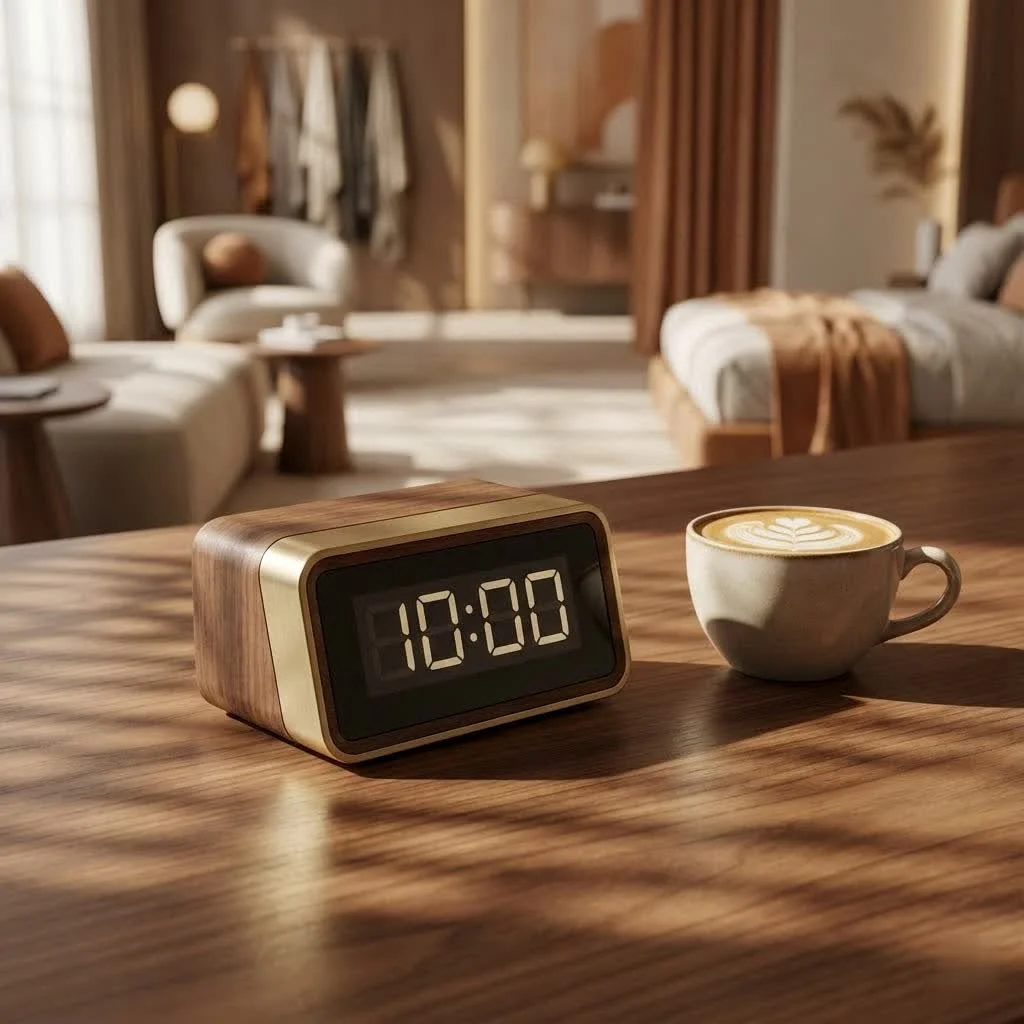
A digital second timer is an electronic device designed to measure time intervals with exceptional precision, often down to a single second or even fractions like 0.01 seconds. These modern devices utilize microcontrollers and display time clearly on LCD or LED screens, enabling precise programming for functions such as countdowns, stopwatches, or intricate on/off patterns, making them indispensable for tasks requiring exact timing in various applications.
What Exactly is a Digital Second Timer?
At its core, a digital second timer is an electronic device meticulously designed to measure time intervals with exceptional precision, often down to a single second, and sometimes even fractions thereof, like 0.01 seconds. Unlike traditional mechanical timers, these modern marvels operate using microcontrollers, displaying time clearly on an LCD or LED screen. This digital brain allows for precise programming, enabling functions far beyond a simple countdown. You can find them counting up like a stopwatch, ticking down to zero, or cycling through intricate on/off patterns, making them incredibly versatile. They are essential for tasks where “good enough” simply isn’t an option.
Where Every Second Counts: Common Applications of Digital Second Timers
The versatility of a digital second timer is truly astounding. From everyday household chores to modern industrial processes, these devices are quietly working behind the scenes, ensuring tasks are completed with impeccable timing.
In the Home & Kitchen
In the domestic sphere, these timers elevate efficiency and precision.
- Culinary Arts: Ever wondered how chefs get dishes just right? A precision second timer ensures your soft-boiled eggs are perfect, your bread rises for precisely the right duration, or your sous vide cooks to the exact minute and second, preventing over or under-cooking.
- Smart Home Automation: Beyond the kitchen, digital timers can manage appliances, turning lights, fans, or even water heaters on and off at specific times, enhancing energy efficiency and security by simulating occupancy when you’re away.
- Automated Pet Care: For pet owners, a programmable second timer can dispense precise portions of food or control misting systems for exotic pets, ensuring they receive nourishment or hydration for exact durations throughout the day.
Industrial & Scientific Precision
Here, the stakes are often much higher, and the digital second timer becomes a mission-critical component.
- Manufacturing and Assembly: In factories, these timers control everything from conveyor belt movements to the duration of heating elements, ensuring consistent product quality and optimizing production lines. They enable precise sequencing of machinery operations, reducing human error and improving workflow.
- Laboratory Experiments: Scientists rely on these timers for experiments where precise chemical reactions or light exposure times are crucial. Accurate timing, often down to hundredths of a second, can be the difference between a successful result and a failed one.
- Hydroponics and Agriculture: For controlled environment agriculture, especially hydroponics, second timers are indispensable for managing irrigation cycles, nutrient delivery, and lighting schedules, ensuring plants receive optimal conditions for growth.
- Voice Search Tip: “What industries benefit most from digital second timers?”
- Answer: Industries requiring high precision and automation, such as manufacturing, pharmaceuticals, food processing, scientific research, and specialized agriculture like hydroponics, benefit immensely from digital second timers.
Sports & Fitness
|
Our Picks for the Best Digital Timer in 2026
As an Amazon Associate I earn from qualifying purchases.
|
||
| Num | Product | Action |
|---|---|---|
| 1 | Elegant Digital Kitchen Timer, Stainless Steel Model eT-23, Super Strong Magnetic Back, Loud Alarm, Large Display, Auto Memory, Auto Shut-Off by eTradewinds |

|
| 2 | Azosowo 2 Pack Digital Timer for Kids, Magnetic Kitchen Timers for Cooking, Egg, Teachers, Classroom, Study, Exercise, Oven Baking - AAA Battery Included |
|
| 3 | Allbean Magnetic Kitchen Timer for Cooking with Loud Alarm - Large LED Display Rotating Countdown Pomodoro Timer, Preset 5/15/25 Mins Easy for Seniors and Kids,for Baking Grilling Studying |
|
| 4 | 2 Pack Digital Kitchen Timer for Cooking Big Digits Loud Alarm Magnetic Backing Stand Cooking Timers for Baking White |
|
| 5 | 6 Pack Multi-Function Electronic Timer, Learning Management, Suitable for Kitchen, Study, Work, Exercise Training, Outdoor Activities(not Including Battery) |
|
| 6 | Visual Kitchen Timer for Cooking,Chef Cooking Timers Clock with Loud Alarm,Timers for Classroom, Home and Study,Mechanical Desk Timer,No Batteries Required,Magnetic Back (Red) |
|
| 7 | VOCOO Digital Kitchen Timer with 7.8” Extra Large Display, Magnetic LED, with 3 Brightness, 4 Alarms and 3 Volume Levels, Battery Powered Countdown Count Up Timer for Cooking, Classroom, Home Gym |
|
| 8 | VOCOO Digital Kitchen Timer - Magnetic Countdown Countup Timer with Large LED Display Volume Adjustable, Easy for Cooking and for Seniors and Kids to Use (Space Grey) |
|
| 9 | GuDoQi Digital Hourglass Pomodoro Timer, Magnetic 1-99 Mins Adjustable Rechargeable Digital Countdown ADHD Timer, Mute/Low Volume/High Low Volume Modes for Work, Study, Back to School, Kitch, Black |
|
| 10 | Easy to USE, Digital Kitchen Timer, Magnetic Timer,Tanmalan(Black,1 Pack) |
|
Athletes and trainers utilize digital second timers for interval training, track and field events, and ensuring consistent rest periods, where precise timing is key to performance and recovery.
Picking Your Perfect Digital Second Timer: A Buyer’s Guide
Choosing the right digital second timer means matching its capabilities to your specific needs. With so many options available, here’s what to consider:
Key Considerations
- Accuracy and Resolution: Do you need precision down to a full second, or are you working with microseconds or milliseconds? Industrial and scientific applications often demand higher resolution than kitchen timers.
- Programmability: How many on/off cycles do you need? Some timers offer dozens of programs per day or week, along with specialized functions like “on-delay” or “cyclic timing” for complex automation.
- Display and Interface: Look for a large, clear LCD or LED display that’s easy to read in various lighting conditions. Intuitive buttons and a straightforward programming process can save you a lot of frustration.
- Power and Portability: Will your timer be a plug-in device for appliances, or do you need a portable, battery-operated unit for on-the-go tasks? Consider battery life and backup features to prevent data loss during power outages.
- Durability and Environment: If you’re using it outdoors or in harsh industrial settings, look for timers with robust construction and features like water resistance.
- Mounting Options: Many smaller timers offer magnets, stands, clips, or hooks, giving you flexibility in where and how you use them.
- Smart Features: Features like memory (to recall previous settings), adjustable alarm volume, or a manual override can significantly enhance usability.
Getting Started: Programming Your Digital Second Timer
While specific steps vary by model, programming a digital second timer generally follows a logical sequence. It’s often much simpler than it seems!
Universal Steps
- Reset Any Existing Programs: Most timers have a small reset button (often requiring a pen tip) to clear previous settings and start fresh.
- Set the Current Time: This is crucial for schedules to run accurately. Some advanced timers auto-sync, but many require manual input of hours, minutes, and seconds.
- Define ON/OFF Cycles: This is where you tell the timer when to activate and deactivate. You’ll typically use buttons labeled ‘P’ (program), ‘H’ (hour), ‘M’ (minute), and ‘S’ (second) to set your desired start and end times. Many timers allow you to specify exact days of the week for each program.
- Select Operating Modes: Timers often feature modes like “ON-OFF Loop” (repeats cycles indefinitely), “OFF-ON Loop,” or “ON” (activates for a single duration). Choose the mode that best suits your application.
- Voice Search Tip: “How do I program a basic digital second timer?”
- Answer: To program a basic digital second timer, first reset it to clear old settings. Then, set the current time accurately. Next, define your desired ON and OFF durations using the program buttons, specifying the hours, minutes, and seconds for each cycle, and select your preferred operating mode.
Smooth Sailing: Troubleshooting Common Digital Second Timer Issues
Even the most reliable digital second timer can encounter a hiccup or two. Don’t worry, many common issues have straightforward solutions.
“My Timer Won’t Turn On!”
This is often the first and most frustrating problem.
- Check Batteries: For battery-operated units, dead or weak batteries are the primary culprits. Replace them with fresh ones, ensuring correct orientation.
- Power Connection: If it’s a plug-in model, ensure it’s securely plugged into a live outlet. Check the power cord for any visible damage.
- Power Cycle: Sometimes, a power surge can temporarily lock up the internal electronics. Disconnect the timer from power for 30 seconds, then plug it back in. This often performs a soft reset.
- Voice Search Tip: “Why won’t my digital second timer power on?”
- Answer: Your digital second timer might not power on due to dead batteries, a loose or faulty power connection, or an internal electronic lock-up from a power surge. Try replacing batteries or power cycling the device.
“The Display is Blank or Flickering.”
A dim or erratic display usually points to a power issue.
- Low Battery: Again, check and replace batteries. Even if the timer seems to be working, low power can affect the display first.
- Screen Damage: In rare cases, the LCD/LED screen itself might be damaged, requiring professional repair or replacement of the unit.
“It’s Not Counting or the Buttons Aren’t Responding.”
If your timer freezes or refuses to accept input, consider these steps:
- Reset/Reprogram: A complete reset (as described in the programming section) can often clear software glitches. You’ll need to reprogram it afterward.
- Internal Damage: If a reset doesn’t work, there might be internal damage to the button mechanism or circuit board, which usually necessitates replacement.
“The Alarm Isn’t Sounding.”
You’ve timed it perfectly, but there’s no alert.
- Muted Settings: Check the timer’s settings to ensure the alarm volume isn’t set to mute or zero. Many models have an adjustable volume switch or button.
- Faulty Speaker: If settings are correct, the internal speaker might be faulty.
“It Turns On/Off Randomly or Stays On.”
Erratic behavior can be particularly vexing.
- Electrical Interference: In some environments, strong electrical signals can interfere with the timer’s operation. Try relocating the timer or shielding it.
- Loose Wiring: For hardwired timers, loose connections can cause intermittent behavior. Always consult a qualified electrician for wiring issues.
- Faulty Unit: If all else fails, the timer itself might be defective and need replacement.
Expert Insight: Dr. Alistair Finch, a seasoned industrial automation engineer, advises: “When a digital second timer acts up, always start with the power source. A surprising number of issues, from erratic timing to display problems, vanish with a fresh set of batteries or a simple power cycle. Don’t overlook the basics; they’re often the most effective troubleshooting steps.”
Conclusion
The digital second timer is far more than a simple clock; it’s a powerful tool for precision, efficiency, and automation across myriad applications. From ensuring culinary perfection in your kitchen to orchestrating complex processes on an industrial scale, understanding its capabilities, knowing how to choose the right one, and being able to troubleshoot common issues are invaluable skills. At Kenws, we are committed to being your most trusted resource in mastering these essential devices. We hope this guide empowers you to confidently select, use, and optimize your digital second timer, unlocking new levels of control and effectiveness in your daily life and professional endeavors. Dive into the world where every second counts, and make the most of your timing devices!
Frequently Asked Questions
What is the primary function of a digital second timer?
The primary function of a digital second timer is to measure time intervals with exceptional precision, often down to 0.01 seconds. These devices are crucial for tasks requiring exact timing, such as scientific experiments or automated processes, where even minor discrepancies can impact results.
How do digital second timers differ from traditional mechanical timers?
Digital second timers differ from traditional mechanical timers by using microcontrollers for operation and displaying time on LCD or LED screens. This digital brain allows for more precise programming and advanced functions like complex on/off patterns, offering greater versatility and accuracy than their mechanical counterparts.
What are common applications for digital second timers in a home setting?
In a home setting, digital second timers are commonly used for culinary arts to ensure precise cooking times, in smart home automation to manage appliances like lights and fans, and for automated pet care to dispense food or control misting systems. These applications enhance efficiency and precision in daily tasks.
Which industries benefit most from using digital second timers?
Industries requiring high precision and automation, such as manufacturing, pharmaceuticals, food processing, scientific research, and specialized agriculture like hydroponics, benefit immensely from digital second timers. These timers ensure consistent product quality, optimize production lines, and facilitate accurate experimental results.
What should I consider when buying a new digital second timer?
When buying a digital second timer, consider its accuracy and resolution (e.g., down to milliseconds), programmability for multiple cycles, display clarity, power source (plug-in or battery), durability for its intended environment, mounting options, and smart features like memory or adjustable alarm volume. Matching these capabilities to your specific needs is key.
What is the first troubleshooting step if a digital second timer won't power on?
If a digital second timer won't power on, the first troubleshooting step is to check the power source. For battery-operated units, replace dead or weak batteries, ensuring correct orientation. For plug-in models, confirm it's securely connected to a live outlet and inspect the power cord for damage. A power cycle (disconnecting for 30 seconds) can also resolve internal electronic lock-ups.
Smart home that does not lock you in
Practical specs, not advice. Unsubscribe anytime.
This guide really helped me understand the difference between basic timers and a true digital second timer. I picked one up for my espresso machine to get consistent pre-infusion times, and it’s made a noticeable difference in my coffee quality. The microcontroller functionality is impressive, allowing for really fine-tuned adjustments. Great for home baristas!
I got one of these for my baking, hoping to get super precise timings. While the countdown feature works well and the LED display is bright, I found the programming a little less intuitive than I expected for intricate tasks. It took a bit of fiddling to set up the exact intervals I needed, but once it’s set, it’s reliable.
I’ve been using a digital second timer for my hydroponics setup, and the precision down to 0.01 seconds is a game-changer. My plants are thriving with the exact watering schedule I can now maintain. The clear LCD screen also makes it super easy to program, even for complex on/off patterns. Definitely recommend for anyone needing accurate timing.
As an electronics hobbyist, I appreciate the deep dive into how these timers use microcontrollers. I’ve integrated a digital second timer into my home automation system for controlling specific light sequences, and the ability to program down to the second is crucial. It’s far superior to any mechanical timer I’ve used before for complex timing needs.